1942
Jim’s Wartime Incarceration
After the United States entered [World War II](entity:time-recall-time-world-war-ii-d4353dde1684), [Jim Shimada](entity:character-recall-character-jim-shimada-ae6039927e0f) and his parents were sent from [California](entity:location-recall-location-california-fd5bbc3f2eb4) to [Manzanar War Relocation Center](entity:location-recall-location-manzanar-93fc0d739878). Jim had wanted to enlist, but his Japanese ancestry barred him from military service; the government instead confined him with other Japanese Americans.
Spring 1943
The Loyalty Oath Crisis
The government’s loyalty questionnaire unsettled the incarcerated community, while pro-[Japan](entity:location-recall-location-japan-2b426de89e42) gangs used the confusion to intimidate other residents. Jim was beaten amid the conflict and transferred away from his parents to the harsher [Camp for Incorrigibles](entity:location-recall-location-camp-for-incorrigibl-41626b52eb2a).
1944–1945
Jim Refuses the Draft
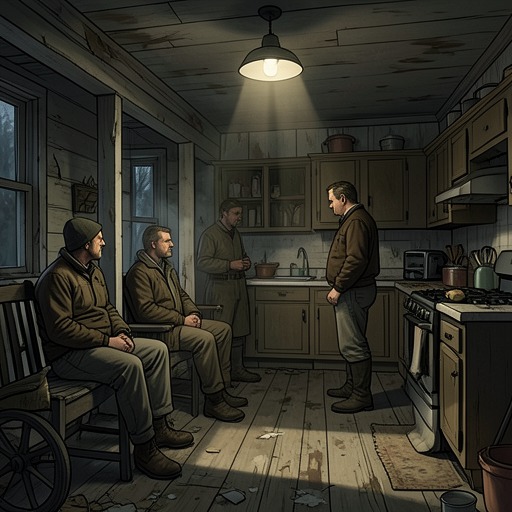
At [Camp for Incorrigibles](entity:location-recall-location-camp-for-incorrigibl-41626b52eb2a), Jim endured prisonlike conditions and recurring violence. When the government drafted him, he refused, demanding that it first restore his parents’ home and livelihood; he was tried for draft evasion and sent to federal prison.
During Jim’s imprisonment at Camp for Incorrigibles
The Camp Breakout
A dispute over food erupted into a riot, and a stolen truck broke through the camp gate. Jim joined the fleeing men, who ran into the winter night knowing they had nowhere safe to go; the escape became a sensational newspaper story.
1947
Jim Returns from Prison
President Truman quietly pardoned Japanese American draft resisters, and Jim returned to civilian life. He briefly married, became a father, and eventually took [Jenny](entity:character-recall-character-jenny-0118fe89ab5a) to [Japan](entity:location-recall-location-japan-2b426de89e42), hoping to begin again, though his own anger and disappointments continued to shape their family life.
Approximately 1958–1963
Jenny’s Childhood Between Countries
[Jenny](entity:character-recall-character-jenny-0118fe89ab5a) spent five years in [Japan](entity:location-recall-location-japan-2b426de89e42) with her father, arriving at about nine and leaving at fourteen. She absorbed the language and the routines of school, and the forced return to [California](entity:location-recall-location-california-fd5bbc3f2eb4) devastated her; there, her Japanese education was treated as a problem rather than an achievement.
Around 1963
The Airplane Lounge
During the flight from [San Francisco](entity:location-recall-location-san-francisco-8a14902ce523) to [Japan](entity:location-recall-location-japan-2b426de89e42), [Jenny](entity:character-recall-character-jenny-0118fe89ab5a) wandered into an upstairs lounge filled with children and adults who welcomed her into their company. Her father eventually found her and brought her back to their seats, and a stewardess later dismissed the people upstairs as businessmen rather than friends.
After returning to California
Jenny Learns Her Father’s History
At school, [Jenny](entity:character-recall-character-jenny-0118fe89ab5a) learned about the wartime incarceration her father had barely discussed. When she asked him, he brushed the subject aside, but the discovery became Jenny’s first key to understanding history, racism, and political power—and widened the distance between them.
Late 1960s
Jenny Meets William
After leaving school without graduating, [Jenny](entity:character-recall-character-jenny-0118fe89ab5a) enrolled in a community political-science class in [Berkeley](entity:location-recall-location-berkeley-4193e5045bd8). Her teacher, [William Weeks](entity:character-recall-character-william-weeks-366b10d7ef72), was a young activist who had been expelled from the university; the two became lovers, and his political language soon became central to her life.
Before William’s arrest in 1972
Jenny and William’s Bombings
[Jenny](entity:character-recall-character-jenny-0118fe89ab5a) and [William](entity:character-recall-character-william-e8cff1bb251f) carried out nighttime bombings against government targets, especially draft offices, believing that symbolic violence would draw attention to the [Vietnam War](entity:time-recall-time-vietnam-war-e7a08391fc30) without killing anyone. Jenny learned to build and wire explosives with confidence, but later came to question whether their carefulness had depended more on luck than moral clarity.
1972
William’s Arrest and Jenny’s Escape
Federal agents arrested [William](entity:character-recall-character-william-e8cff1bb251f) at the workshop while [Jenny](entity:character-recall-character-jenny-0118fe89ab5a) was at home preparing dinner. She fled with what she could carry, and [Rob Frazer](entity:character-recall-character-rob-frazer-a048416d62bf) drove her south to the [Los Angeles](entity:location-recall-location-a4be76fb5f5a) airport; William went to prison, while Jenny began a fugitive life without knowing how long it would last.
Late 1972
Jenny’s First Hiding Places
After briefly staying with [Dick](entity:character-recall-character-dick-aa8333e129bc) and [Helen](entity:character-recall-character-helen-25ca9ab47439) in Riverdale under an assumed identity, [Jenny](entity:character-recall-character-jenny-0118fe89ab5a) left when Dick entered her room at night and made her feel unsafe. She traveled north to [Rhinecliff](entity:location-recall-location-rhinecliff-3933a7726788), found work at [Wildmoor](entity:location-recall-location-wildmoor-1f99d2db6962), and took the name Iris Wong, trying to survive without exposing her real story.
Late 1972
Wildmoor’s Reluctant Boarder
[Dolly](entity:character-recall-character-dolly-384355b862d2) hired [Jenny](entity:character-recall-character-jenny-0118fe89ab5a) for restoration work at [Wildmoor](entity:location-recall-location-wildmoor-1f99d2db6962), offering room and board and a small hourly wage. The arrangement gradually became exploitative: Dolly delayed paying her, leaving Jenny dependent on the house, its supplies, and the small allowance that kept her going.
Late 1972 onward
Jenny’s Red Hook Routine
[Jenny](entity:character-recall-character-jenny-0118fe89ab5a) established a post-office box in [Red Hook](entity:location-recall-location-red-hook-3965c2925ee8) and subscribed to the local paper, first scanning each issue for news about herself. She gradually made a habit of reading the entire newspaper in her car, treating the small town and its routines as the boundaries of her temporary world.
Winter 1972–1973
Jenny’s Life at Wildmoor
[Jenny](entity:character-recall-character-jenny-0118fe89ab5a) learned restoration by working on [Wildmoor](entity:location-recall-location-wildmoor-1f99d2db6962)’s rooms, ceilings, and woodwork, and became increasingly frustrated by [Dolly](entity:character-recall-character-dolly-384355b862d2)’s incuriosity and control over her pay. The house offered a refuge from scrutiny, but its isolated routines also intensified Jenny’s loneliness.
February 1973
The Paris Cease-Fire News
In the [Rhinebeck](entity:location-recall-location-rhinebeck-3ffc2172d796) newspaper, [Jenny](entity:character-recall-character-jenny-0118fe89ab5a) read that cease-fire agreements had been signed in Paris to end the [Vietnam War](entity:time-recall-time-vietnam-war-e7a08391fc30). The polished report, complete with descriptions of officials’ clothing, made the war’s conclusion feel remote from her own life, with [William](entity:character-recall-character-william-e8cff1bb251f) imprisoned and Jenny still wanted.
Summer and autumn 1973
Watergate and the Question of Surrender
[Jenny](entity:character-recall-character-jenny-0118fe89ab5a) listened to the [Watergate hearings](entity:time-recall-time-watergate-hearings-8be07c8a0c32) while she worked at [Wildmoor](entity:location-recall-location-wildmoor-1f99d2db6962), sensing that the upheaval might change how the public viewed political dissent. [William](entity:character-recall-character-william-e8cff1bb251f) wrote that the national mood might now be more sympathetic to radicals and urged her to contact a lawyer, but she delayed making the call.
Early 1974
The Peekskill Lawyer Meeting
[Jenny](entity:character-recall-character-jenny-0118fe89ab5a) met a young lawyer on a cold bench in [Peekskill](entity:location-recall-location-9330c474b158) and asked whether Watergate might improve her prospects if she surrendered. He told her there would be no special amnesty and warned that prosecutors would press her for information, including anything she knew about a new kidnapping.
Early 1974
Jenny Refuses to Cooperate
The lawyer suggested that information about the kidnapped heiress could help [Jenny](entity:character-recall-character-jenny-0118fe89ab5a), but she refused to betray people she did not know. She later wrote that she was not ready to surrender, having realized that neither Watergate nor the broader political climate would protect her from prosecution.
Early 1974
Pauline’s Kidnapping
A small revolutionary cadre kidnapped [Pauline](entity:character-recall-character-pauline-17d56a2a28c3), the young daughter of a wealthy [California](entity:location-recall-location-california-fd5bbc3f2eb4) family, and held her while demanding a vast food-distribution program for people in need. The kidnapping made national headlines and forced [Jenny](entity:character-recall-character-jenny-0118fe89ab5a), watching from [Wildmoor](entity:location-recall-location-wildmoor-1f99d2db6962), to confront a political crisis connected to the world she had left behind.
Early 1974
The Food-Distribution Operation
[Pauline](entity:character-recall-character-pauline-17d56a2a28c3)’s family publicly treated the cadre’s demand as vague and nearly impossible, then organized a costly food distribution that produced chaotic results. Critics on the left called the demand grandstanding, while the wealthy family increasingly appeared to be the reasonable party in the story.
April 3, 1974
Pauline’s Declaration
In a broadcast tape, [Pauline](entity:character-recall-character-pauline-17d56a2a28c3) announced that she had chosen to remain with the cadre, calling them her family and their struggle the only just one. [Jenny](entity:character-recall-character-jenny-0118fe89ab5a) heard the declaration on the radio and felt her imagined opportunity to surrender closing; the news made the kidnapping more than a distant political spectacle.
April 1974
The Cadre’s Bank Robbery
[Pauline](entity:character-recall-character-pauline-17d56a2a28c3) joined the cadre in a bank robbery that raised money for their cause and was caught on security footage. The authorities recast her as a wanted criminal rather than a kidnapping victim, while arguments over her choice and her freedom continued to divide public opinion.
May 1974
The Los Angeles Siege
After the cadre was traced to a house in [Los Angeles](entity:location-recall-location-a4be76fb5f5a), police and federal agents surrounded the building. A fierce gun battle and fire killed nine members; [Jenny](entity:character-recall-character-jenny-0118fe89ab5a) followed the catastrophe by radio, unaware that [Juan](entity:character-recall-character-juan-08eb0a988bb3), [Yvonne](entity:character-recall-character-yvonne-3d00d3f7e6d0), and [Pauline](entity:character-recall-character-pauline-17d56a2a28c3) had escaped and were already being moved toward the East Coast.
Several years before 1974
Frazer’s Rise to Prominence
At [Berkeley](entity:location-recall-location-berkeley-4193e5045bd8), [Frazer](entity:character-recall-character-frazer-241a3b96821f) had left football and built a reputation as a critic of the exploitation of athletes, racism, and the politics of professional sports. His writings and public interventions brought him celebrity, and he later used appointments as an athletic director to advance his influence and extract substantial severance payments.
Before the main 1974 events
The Gymnasium Controversy
A university plan for an ornate gym in a Black neighborhood promised community access, then restricted that access and displayed slogans that residents found insulting. Students turned the project into a focus for broader protests, and the university eventually hired [Frazer](entity:character-recall-character-frazer-241a3b96821f) as athletic director; he was fired again after appointing a Black co-director.
May 1974
Frazer Is Recruited to Help
After [Sandy](entity:character-recall-character-sandy-457b75877fae) contacted [Frazer](entity:character-recall-character-frazer-241a3b96821f) about the surviving fugitives, he traveled to [San Francisco](entity:location-recall-location-san-francisco-8a14902ce523) in disguise and met [Juan](entity:character-recall-character-juan-08eb0a988bb3), [Yvonne](entity:character-recall-character-yvonne-3d00d3f7e6d0), and [Pauline](entity:character-recall-character-pauline-17d56a2a28c3) in a sealed, filthy room. He proposed moving them east, finding a safe house, and financing a book that would tell their story and support their cause.
May 1974
The Fugitives Accept Frazer’s Offer
The three survivors initially resisted leaving [California](entity:location-recall-location-california-fd5bbc3f2eb4), but [Frazer](entity:character-recall-character-frazer-241a3b96821f) persuaded them that a temporary move east could keep them alive and raise money. They agreed to consider the book, provided they could retain weapons; Frazer arranged travel by separate cars and promised to replace the guns at the other end.
June 4, 1974
Frazer Finds Jenny
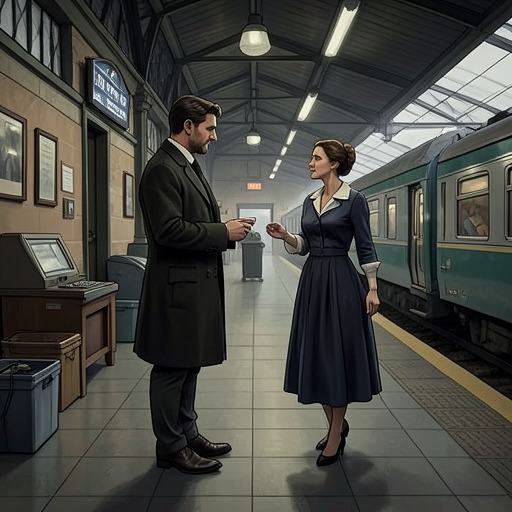
Using information from [Sandy](entity:character-recall-character-sandy-457b75877fae), [Dana](entity:character-recall-character-dana-a77a79fda3ce), and [Jenny](entity:character-recall-character-jenny-0118fe89ab5a)’s letters, [Frazer](entity:character-recall-character-frazer-241a3b96821f) traced her to the [Rhinecliff](entity:location-recall-location-rhinecliff-3933a7726788) train station. When he appeared, Jenny reacted with shock and asked first whether [William](entity:character-recall-character-william-e8cff1bb251f) was all right; Frazer reassured her, and she agreed to take him somewhere private.
June 4, 1974
Frazer and Jenny Talk at the Cliff
At a secluded overlook, [Jenny](entity:character-recall-character-jenny-0118fe89ab5a) and [Frazer](entity:character-recall-character-frazer-241a3b96821f) confronted her departure from [Dick](entity:character-recall-character-dick-aa8333e129bc) and [Helen](entity:character-recall-character-helen-25ca9ab47439)’s home and her failure to contact him. Frazer told her he had seen [William](entity:character-recall-character-william-e8cff1bb251f), relayed William’s concern for her, and challenged Jenny about the secret sexual encounter they had once shared.
June 4, 1974
Jenny Joins the Safe-House Plan
[Frazer](entity:character-recall-character-frazer-241a3b96821f) persuaded [Jenny](entity:character-recall-character-jenny-0118fe89ab5a) to help the three fugitives, arguing that her underground experience made her indispensable. She resisted when she realized whom he meant, then ran from him; after he left her a note at [Wildmoor](entity:location-recall-location-wildmoor-1f99d2db6962), she eventually met him at his motel and agreed to go.
Early June 1974
The Survivors Reach the Farmhouse
[Jenny](entity:character-recall-character-jenny-0118fe89ab5a) arrived at the remote rented farmhouse after an overnight drive with [Frazer](entity:character-recall-character-frazer-241a3b96821f) and [Carol](entity:character-recall-character-carol-b3a9cb930038). Frazer left her with forty dollars and responsibility for the day-to-day work, while the three exhausted fugitives slept behind a closed door.
The first evening at the farmhouse
Jenny Meets the Survivors
[Jenny](entity:character-recall-character-jenny-0118fe89ab5a) encountered [Juan](entity:character-recall-character-juan-08eb0a988bb3) outside, then saw [Pauline](entity:character-recall-character-pauline-17d56a2a28c3) and [Yvonne](entity:character-recall-character-yvonne-3d00d3f7e6d0) in the kitchen. The three were gaunt, grieving, and detached from the practical needs of their survival; rather than welcoming her, they returned to their room with wine and left her alone with the work of keeping them alive.
June 1974
Jenny Resettles the Fugitives
[Jenny](entity:character-recall-character-jenny-0118fe89ab5a) drove through [Ferndale](entity:location-recall-location-df0f305abdf4) and [Monticello](entity:location-recall-location-monticello-a21b59edadb1) to stock the farmhouse with canned food, then rented a post-office box in [Liberty](entity:location-recall-location-liberty-4b66db59b113) under a new identity. She began calling [Frazer](entity:character-recall-character-frazer-241a3b96821f) from a pay phone, reporting that the fugitives were not eating and seemed indifferent to whether they survived.
June 1974
The Eulogy Begins
After [Jenny](entity:character-recall-character-jenny-0118fe89ab5a) urged the fugitives to write about their dead comrades, the trio began composing a eulogy rather than the promised book. Their late-night work gathered force, but their grief quickly merged with a desire to broadcast a threat of vengeance.
June 1974
The Eulogy Tape Is Mailed
[Juan](entity:character-recall-character-juan-08eb0a988bb3) decided to send the eulogy tape to a radio station, and [Jenny](entity:character-recall-character-jenny-0118fe89ab5a) stopped him from driving there by offering to handle delivery. She routed the package through [Dana](entity:character-recall-character-dana-a77a79fda3ce), instructing her to use gloves and not open the inner envelope, but Dana feared the unexplained contents and their contact became strained.
June 1974
The Eulogy Broadcast
The tape aired on a radio station, carrying [Yvonne](entity:character-recall-character-yvonne-3d00d3f7e6d0)’s account of the siege, [Juan](entity:character-recall-character-juan-08eb0a988bb3)’s militant denunciation, and [Pauline](entity:character-recall-character-pauline-17d56a2a28c3)’s personal remembrances of the dead. Pauline broke down hearing her own tribute, while the broadcast renewed national attention and left [Jenny](entity:character-recall-character-jenny-0118fe89ab5a) fearing that her actions had exposed [Dana](entity:character-recall-character-dana-a77a79fda3ce) and the fugitives.
A few days after the broadcast
Frazer Brings a Feast
[Frazer](entity:character-recall-character-frazer-241a3b96821f) returned early to the farmhouse with food, expecting progress on the book and angry that the eulogy had been sent out without his control. He apologized to [Jenny](entity:character-recall-character-jenny-0118fe89ab5a) for yelling, then used the promise of more weapons to push the fugitives toward beginning their commercial manuscript.
June–July 1974
The Survivors Resume Training
[Frazer](entity:character-recall-character-frazer-241a3b96821f)’s visit helped the fugitives eat, exercise, and recover enough to begin regular training on the farm. [Juan](entity:character-recall-character-juan-08eb0a988bb3) organized running, strength work, and combat drills; [Jenny](entity:character-recall-character-jenny-0118fe89ab5a) found herself drawn into the group’s routines, especially when [Pauline](entity:character-recall-character-pauline-17d56a2a28c3) became her partner in a forest game.
Summer 1974
Jenny and Pauline Release the Mice
[Jenny](entity:character-recall-character-jenny-0118fe89ab5a) brought a humane trap into the farmhouse and invited [Pauline](entity:character-recall-character-pauline-17d56a2a28c3) to watch as mice entered it through the night. Together they carried the crowded trap into the fields and released the animals, a small shared ritual that gave Pauline a chance to act with Jenny outside the tensions of the trio.
Summer 1974
Jenny Meets Thomas
While shopping near [Monticello](entity:location-recall-location-monticello-a21b59edadb1), [Jenny](entity:character-recall-character-jenny-0118fe89ab5a) spoke with [Thomas](entity:character-recall-character-thomas-96b965fcdef2), a young Black grocery-store worker who joked that his brother had died in [Vietnam](entity:location-recall-location-11e77564f811) before admitting that his brother had fled the draft. Jenny told him about her own father’s resistance and the incarceration of Japanese Americans, then left knowing she had broken her rule against forming local ties.
Summer 1974
Pauline Shares the Cadre’s Past
During [Jenny](entity:character-recall-character-jenny-0118fe89ab5a)’s fever, [Pauline](entity:character-recall-character-pauline-17d56a2a28c3) brought her soup and later showed her clippings that documented the rebellious life she had led before the kidnapping. Jenny tried to understand Pauline’s transformation, but Pauline insisted that Jenny did not know her well enough to judge the choices she had made.
Summer 1974
The Gun Arrives
[Frazer](entity:character-recall-character-frazer-241a3b96821f) brought the fugitives a real handgun but not the full arsenal he had promised, while also bringing a ghostwriter without consulting [Jenny](entity:character-recall-character-jenny-0118fe89ab5a). [Juan](entity:character-recall-character-juan-08eb0a988bb3) threatened Frazer and the writer, seized control of the meeting, and demanded more money, weapons, and a new location.
Summer 1974
Juan’s Hijacking Talk
After receiving the revolver, [Juan](entity:character-recall-character-juan-08eb0a988bb3) described past hijackings to [Havana](entity:location-recall-location-8d992dd056a5) and imagined escape through another plane seizure. He pointed the unloaded gun at [Pauline](entity:character-recall-character-pauline-17d56a2a28c3) and [Jenny](entity:character-recall-character-jenny-0118fe89ab5a) during a mock hijacking, turning a casual story into a reminder that the group’s violent fantasies were becoming dangerously concrete.
Late summer 1974
The Landlord Finds the House
The farmhouse’s owner, Bob, unexpectedly arrived to check on the property. [Yvonne](entity:character-recall-character-yvonne-3d00d3f7e6d0) invented a family identity for herself and the others, but the visit made clear that their cover could collapse at any time; the fugitives buried supplies and their few pages of writing in the woods.
After Bob’s visit
Juan Takes Thomas Home
[Juan](entity:character-recall-character-juan-08eb0a988bb3) insisted that [Jenny](entity:character-recall-character-jenny-0118fe89ab5a) drive him to [Monticello](entity:location-recall-location-monticello-a21b59edadb1) and approached [Thomas](entity:character-recall-character-thomas-96b965fcdef2), drawing him into conversation about work, race, and the local bank. Jenny recognized that Juan was scouting a robbery and became alarmed when he later spoke of rebuilding the cadre by recruiting the boy.
Late summer 1974
Frazer Brings a Ghostwriter
[Frazer](entity:character-recall-character-frazer-241a3b96821f) arrived with Alan, a writer he had recruited to help turn the fugitives’ story into a book. [Juan](entity:character-recall-character-juan-08eb0a988bb3) treated the unexpected visitor as a security breach, held him at gunpoint, and forced Frazer to leave without resolving the group’s distrust or the dispute over weapons and money.
Late summer 1974
The Robbery Plan
[Juan](entity:character-recall-character-juan-08eb0a988bb3) proposed robbing the bank used by [Thomas](entity:character-recall-character-thomas-96b965fcdef2)’s employer, arguing that the stolen money would finance the group’s survival. [Jenny](entity:character-recall-character-jenny-0118fe89ab5a) refused, despite understanding the economic argument he offered, and Juan disabled her car by removing a spark-plug wire so she could not leave or obstruct the plan.
Late summer 1974
Pauline Recruits Jenny
[Pauline](entity:character-recall-character-pauline-17d56a2a28c3) told [Jenny](entity:character-recall-character-jenny-0118fe89ab5a) that she had been assigned to persuade her to stay and that [Juan](entity:character-recall-character-juan-08eb0a988bb3) might kill her if she failed. Jenny agreed to drive the switch car, believing she was protecting Pauline, but later realized Pauline had fabricated the threat partly to win approval from Juan and [Yvonne](entity:character-recall-character-yvonne-3d00d3f7e6d0).
Late summer 1974
The Monticello Robbery
[Juan](entity:character-recall-character-juan-08eb0a988bb3) and [Yvonne](entity:character-recall-character-yvonne-3d00d3f7e6d0) robbed the bank after rehearsing a plan in which Yvonne would disguise herself as a woman returning from a visit and threaten the small store owner. [Jenny](entity:character-recall-character-jenny-0118fe89ab5a) waited in a separate car while [Pauline](entity:character-recall-character-pauline-17d56a2a28c3) drove the getaway vehicle; the operation ended with [Mr. Morton](entity:character-recall-character-mr-morton-2859cb517fb9) fatally shot.
Immediately after the robbery
Jenny Leaves with Pauline
Back at the farmhouse, [Jenny](entity:character-recall-character-jenny-0118fe89ab5a) saw the blood on [Yvonne](entity:character-recall-character-yvonne-3d00d3f7e6d0) and heard [Pauline](entity:character-recall-character-pauline-17d56a2a28c3) say that the man was dead. While [Juan](entity:character-recall-character-juan-08eb0a988bb3) and Yvonne cleaned up, Jenny grabbed her belongings and the money, forced Pauline into the Bug, and drove away without looking back.
After Jenny and Pauline flee
Frazer Returns to the Farmhouse
[Frazer](entity:character-recall-character-frazer-241a3b96821f) found [Juan](entity:character-recall-character-juan-08eb0a988bb3) and [Yvonne](entity:character-recall-character-yvonne-3d00d3f7e6d0) in the woods, and they admitted what had happened. The three worked together to clean the farmhouse and barn, burn what they could, and erase traces of their stay before leaving the property and continuing their flight.
Late summer 1974
Jenny Returns to Wildmoor
[Jenny](entity:character-recall-character-jenny-0118fe89ab5a) drove back to [Wildmoor](entity:location-recall-location-wildmoor-1f99d2db6962) with [Pauline](entity:character-recall-character-pauline-17d56a2a28c3), intending to trade the Bug for [Dolly](entity:character-recall-character-dolly-384355b862d2)’s seldom-used car and leave. She woke Dolly before dawn and bargained for the car, offering money in place of the wages Dolly still owed her.
The morning after returning to Wildmoor
Jenny and Pauline Separate
On the road, [Jenny](entity:character-recall-character-jenny-0118fe89ab5a) told [Pauline](entity:character-recall-character-pauline-17d56a2a28c3) that they were implicated in murder and ordered her out of the car. Pauline refused to be left behind; after Jenny walked away with her belongings, Pauline drove after her and collapsed in tears, and Jenny chose to bring her along.
Late summer 1974
The Cross-Country Flight
[Jenny](entity:character-recall-character-jenny-0118fe89ab5a) and [Pauline](entity:character-recall-character-pauline-17d56a2a28c3) headed west in [Dolly’s car](entity:object-recall-object-dolly-f9602693184b), traveling by back roads and changing direction whenever they felt exposed. They survived breakdowns, a [Missouri](entity:location-recall-location-f321c7abc52b) rainstorm, and the threat of police nearby, while gradually confronting the fact that they had caused a man’s death and could not simply explain it away.
During the westward journey
The Truck Rescue
In a blinding storm, [Jenny](entity:character-recall-character-jenny-0118fe89ab5a) and [Pauline](entity:character-recall-character-pauline-17d56a2a28c3)’s car stalled near a truck that had slid into a muddy ditch. Police and rescue crews arrived, but their attention remained on the truck; the women were treated as motorists responsible for road trouble, and the incident passed without exposing them.
During the westward journey
The Outlaw Inn
The women stopped at a remote bar and found [Pauline](entity:character-recall-character-pauline-17d56a2a28c3)’s wanted poster hanging among old outlaw notices. They managed to drink, joke, and tell the bartender they were heading east, even as the sight of Pauline’s image reminded them that the country was searching for her.
Late summer 1974
Jenny and Pauline Reach Berkeley
After crossing the [Great Plains](entity:location-recall-location-5eaa9f1f8a82) and the mountains, [Jenny](entity:character-recall-character-jenny-0118fe89ab5a) and [Pauline](entity:character-recall-character-pauline-17d56a2a28c3) returned to the [San Francisco Bay Area](entity:location-recall-location-52f1d9e195b0). Disguised as churchgoing girls, they went to [Sandy](entity:character-recall-character-sandy-457b75877fae)’s door in [North Berkeley](entity:location-recall-location-053cfc862026) and asked whether she had heard the Good News, reentering a world of old friends and dangerous connections.
After the return to Berkeley
The New Berkeley Apartment
Tom helped [Jenny](entity:character-recall-character-jenny-0118fe89ab5a) and [Pauline](entity:character-recall-character-pauline-17d56a2a28c3) rent a room in a building owned by [Mr. Minski](entity:character-recall-character-mr-minski-6d007930edb3), presenting them as newcomers from the East Coast. The women began rebuilding a quieter life, hiding their belongings and money while finding relief in a city where crowds offered anonymity without the farmhouse’s isolation.
After settling in Berkeley
The Women’s Firearms Group
Tom delivered the weapons that the fugitives had left in [California](entity:location-recall-location-california-fd5bbc3f2eb4), and [Pauline](entity:character-recall-character-pauline-17d56a2a28c3) proposed teaching other women how firearms worked. [Jenny](entity:character-recall-character-jenny-0118fe89ab5a) joined [Sandy](entity:character-recall-character-sandy-457b75877fae), Joanne, and Lena in learning about guns, discovering a pleasure in asking questions and learning openly rather than pretending to already know.
After the return to Berkeley
Mike Supports Jenny
[Jenny](entity:character-recall-character-jenny-0118fe89ab5a) met [Mike Sorsa](entity:character-recall-character-mike-sorsa-e13b8e62b81a) in [Golden Gate Park](entity:location-recall-location-d81d27b8b48b), where he gave her five hundred dollars and offered continuing help. Mike said he was honoring a promise to [William](entity:character-recall-character-william-e8cff1bb251f) to keep Jenny safe, while also suggesting that [Frazer](entity:character-recall-character-frazer-241a3b96821f)’s rescue had been entangled with personal feelings.
After their return to Berkeley
Jenny and Pauline Visit Pauline’s Home
Using Tom’s tinted-window Gremlin, [Jenny](entity:character-recall-character-jenny-0118fe89ab5a) and [Pauline](entity:character-recall-character-pauline-17d56a2a28c3) watched Pauline’s family home from across the street. Pauline explained how her parents’ public defense of the family’s wealth and power had convinced her that they would not change for her sake, even as she admitted that she no longer wanted to return to them.
The following summer
The Bay Area Fire
As fires spread through the [Berkeley Hills](entity:location-recall-location-baa817413814), [Jenny](entity:character-recall-character-jenny-0118fe89ab5a) and [Pauline](entity:character-recall-character-pauline-17d56a2a28c3) watched from their roof while smoke and heat moved toward the city. They felt strangely removed from danger, protected by the fragile sense that the catastrophe belonged to the outside world and could not reach their private life.
Winter after the farmhouse escape
The Fugitives’ Hidden Footprints
Months after the farmhouse was abandoned, federal agents searched the clean house and found a partial fingerprint preserved on tape beneath a mattress patch. The print led investigators toward [Jenny](entity:character-recall-character-jenny-0118fe89ab5a) and her network, demonstrating how a small physical trace could survive long after the fugitives had tried to erase themselves.
Before Jenny’s arrest in 1975
Jim’s Wartime Memories
[Jim Shimada](entity:character-recall-character-jim-shimada-ae6039927e0f) grew increasingly sensitive to slow-moving cars near his home and greenhouse, unsure whether he was being watched or merely reliving old fear. He remembered Manzanar, the camp’s makeshift social world, and the painful distance between himself and his parents, who had watched their children grow into strangers.
During the lost year
Pauline Returns to Her Family’s House
[Jenny](entity:character-recall-character-jenny-0118fe89ab5a) and [Pauline](entity:character-recall-character-pauline-17d56a2a28c3) revisited Pauline’s empty family estate, where Pauline recalled her mother’s refusal to resign from a company board as a gesture toward the cadre. Pauline said she was finished with both her parents and the revolutionary group, though she remained bound to Jenny and the life they had built together.
During the lost year
Frazer Searches for Jenny
[Frazer](entity:character-recall-character-frazer-241a3b96821f) asked [Sandy](entity:character-recall-character-sandy-457b75877fae) and Tom whether they knew where [Jenny](entity:character-recall-character-jenny-0118fe89ab5a) and [Pauline](entity:character-recall-character-pauline-17d56a2a28c3) were, insisting that finding Jenny was urgent. They did not reveal the women’s address, and Frazer’s frustration and apparent need for money left them unsure whether his concern was personal, practical, or both.
During the lost year
Anne Investigates Pauline
Reporter [Anne Casey](entity:character-recall-character-anne-casey-410ad08f3147) pursued [Pauline](entity:character-recall-character-pauline-17d56a2a28c3)’s story and met a man calling himself Joe Smith, who claimed that the [FBI](entity:organization-recall-organization-c3b9c0848e8c) had linked [Jenny](entity:character-recall-character-jenny-0118fe89ab5a) to Pauline. Anne could not verify his account and initially treated Jenny as a minor thread in a larger story that revolved around Pauline.
August 1975
The California Arrests
Federal agents arrested [Pauline](entity:character-recall-character-pauline-17d56a2a28c3) and [Jenny](entity:character-recall-character-jenny-0118fe89ab5a) in [San Francisco](entity:location-recall-location-san-francisco-8a14902ce523) and [Oakland](entity:location-recall-location-oakland-479b7c0dace1), separating them immediately. Pauline shouted [Venceremos](entity:expression-recall-expression-venceremos-29cc7cb0f603) for the cameras; Jenny remained anonymous in the news coverage, while her father traveled to Oakland hoping to see her.
After the arrests in 1975
Jenny’s Bail Statement
At [Pauline](entity:character-recall-character-pauline-17d56a2a28c3)’s lawyers’ request, [Jenny](entity:character-recall-character-jenny-0118fe89ab5a) wrote a statement portraying Pauline as a captive and herself as one of her captors, arguing that Pauline’s criminal acts had not been freely chosen. The judge rejected the account as a tactical lie, while public coverage continued to frame Pauline as either brainwashed or culpable.
During pretrial proceedings
Pauline Accuses Jenny
[Jenny](entity:character-recall-character-jenny-0118fe89ab5a)’s lawyer, [George Elson](entity:character-recall-character-george-elson-9632e69c22e7), told her that [Pauline](entity:character-recall-character-pauline-17d56a2a28c3) had identified her as an accessory to [Mr. Morton](entity:character-recall-character-mr-morton-2859cb517fb9)’s murder. Jenny initially refused to believe that Pauline had betrayed her, even as Pauline’s statements implicated other people from their fugitive network.
After Pauline’s accusation
Jenny’s Imprisonment and Reflection
Alone in jail, [Jenny](entity:character-recall-character-jenny-0118fe89ab5a) grieved the rupture with [Pauline](entity:character-recall-character-pauline-17d56a2a28c3) and reconsidered her own history of political violence. She began to see that high intentions had not made her bombings harmless, and that luck—not moral purity—might have kept her from killing anyone before [Mr. Morton](entity:character-recall-character-mr-morton-2859cb517fb9).
Before Jenny’s trial
Asian American Support for Jenny
People from Japanese, Chinese, Korean, and Filipino communities began visiting [George Elson](entity:character-recall-character-george-elson-9632e69c22e7)’s office and contributing money to [Jenny](entity:character-recall-character-jenny-0118fe89ab5a)’s defense. Their support surprised Jenny’s father, who had spent much of his life avoiding the very communities that now treated his daughter as family.
After the trials
The Separate Sentences
[Pauline](entity:character-recall-character-pauline-17d56a2a28c3) was convicted in the bank robbery case but served less than two years before her sentence was commuted, her wealth and public image helping her emerge with much of her status intact. [Jenny](entity:character-recall-character-jenny-0118fe89ab5a) received a minimum sentence for her earlier bombings and experienced prison praise as another form of racial tokenization.
During Jenny’s imprisonment
William Lets Jenny Go
[William](entity:character-recall-character-william-e8cff1bb251f) continued to write [Jenny](entity:character-recall-character-jenny-0118fe89ab5a) with practical advice and encouragement, but his letters no longer carried the intimacy of a lover. Jenny understood that she had changed and that he had quietly released her, and she stopped writing after his responses grew distant.
During and after her sentence
Jenny Writes Her Way Back
[Jenny](entity:character-recall-character-jenny-0118fe89ab5a) filled notebooks with the histories and feelings she had never shared with [Pauline](entity:character-recall-character-pauline-17d56a2a28c3), slowly recovering a sense of herself through writing. She came to understand that their closeness had been real but incomplete, and that their different social positions would shape the consequences each faced.
Two years after her release
Jenny Returns to Berkeley
Back in [Berkeley](entity:location-recall-location-berkeley-4193e5045bd8), [Jenny](entity:character-recall-character-jenny-0118fe89ab5a) found a communal household and chose a bright dining-room space with a bay window rather than the dark bedroom offered to her. She began to imagine a future in which she could want ordinary things for herself, including a home and perhaps a child.
After returning to Berkeley
Jenny Works at the Juice Bar
[Jenny](entity:character-recall-character-jenny-0118fe89ab5a) found steady work at a juice bar and valued the physical routine and small social order it gave her. Some customers recognized her as a minor celebrity, but she neither confirmed nor denied their assumptions, keeping her distance from the public image attached to her past.
After Jenny’s return to Berkeley
Frazer Visits Jenny
[Frazer](entity:character-recall-character-frazer-241a3b96821f) came to the juice bar, ordered carrot and ginger, and asked whether [Jenny](entity:character-recall-character-jenny-0118fe89ab5a) was happy. She told him she was, and he admitted that he and [Carol](entity:character-recall-character-carol-b3a9cb930038) were divorcing; their reunion ended in an awkward embrace that carried affection without resolving their history.
Years after her release
Pauline’s Public Reinvention
[Jenny](entity:character-recall-character-jenny-0118fe89ab5a) saw on television that [Pauline](entity:character-recall-character-pauline-17d56a2a28c3) had married a member of her family’s security detail. The image of Pauline in a wedding gown felt wholly separate from the fugitive with whom Jenny had shared the farmhouse and the long road west.
Several years after returning to Berkeley
Jenny Visits Her Father
[Jenny](entity:character-recall-character-jenny-0118fe89ab5a) drove her father from [Stockton](entity:location-recall-location-stockton-98535a1a8fc9) toward Manzanar for a reunion, despite his anxious complaints about the weather and the road. On reaching the desert site, he told a young volunteer that he had lived there; then he chose to join the others in setting up the gathering.
At the Manzanar reunion
Jenny Follows Her Father
After her father headed toward the people preparing the reunion, [Jenny](entity:character-recall-character-jenny-0118fe89ab5a) followed him. The journey brought father and daughter back to the place that had shaped his anger and her political awakening, ending the novel with a modest act of shared presence rather than a completed reconciliation.